


My Items
I'm a title. Click here to edit me.

Drones, Wine and Salt: Hyperspectral Imaging from Košice in Barcelona
Imaging spectroscopy is a technology that makes it possible to detect different materials based on their spectral fingerprint (signature), similar to how fingerprints are unique to every person. It is used in the food industry, medicine, and in mapping the Earth’s surface. From 12–14 November 2025, experts in this technology from fields such as medicine, geography, geology, art, architecture, textile industry, environmental pollution, and satellite mapping gathered in Barcelona to share their experience and learn from one another. We were able to join this community at the international scientific conference WHISPERS 2025 at the Universitat Autònoma de Barcelona . The Institute of Geography, Faculty of Science, Pavol Jozef Šafárik University in Košice (PF UPJŠ), was represented by Assoc. Prof. Michal Gallay together with our former colleague Assoc. Prof. Ján Kaňuk , currently employed at Photomap s.r.o. Through a poster contribution, they presented the results of applying drones for hyperspectral and lidar mapping of grapevine in the Tokaj vineyards. The research was made possible thanks to our remotely piloted drones and onboard sensors purchased with the support of the European Union. Assoc. Prof. Kaňuk presented the results of a study comparing hyperspectral data from four sources to determine the spectral stability of an intermittent salt pan in Sardinia. The contribution on vineyards arose from cooperation with the winery Ostrožovič s.r.o . and our Ukrainian colleague Assoc. Prof. Vasyl Cherlinka . Together, we processed data acquired by a remotely piloted drone equipped with sensors that, even ten years after their purchase, still rank among state-of-the-art. The second study is a joint activity with colleagues from the University of Cagliari and the National Institute of Geophysics and Volcanology in Rome . The data were collected during a joint summer school, and the aim is to demonstrate the suitability of an intermittently drying salt lake as a calibration site for hyperspectral satellites. There are very few such sites in the world, which makes their identification and detailed characterization extremely important for the accuracy and long-term reliability of satellite measurements.

International Workshop at the Institute of Geography
As part of the SECPOLYC: Changing role of SEcondary Cities in the POLYcentric development of Visegrad Countries project, supported by the International Visegrad Fund , a series of working meetings of the project team took place at the Institute of Geography on 12–14 November . The professional highlight of the Košice programme was a Workshop featuring a series of lectures for students and invited local and regional stakeholders , followed by a discussion. This allowed us to uncover various perspectives on the issues of secondary cities at different spatial levels and to address the question of supporting polycentric development from the viewpoints of academics and local and regional authorities. We would like to thank all the stakeholders for their participation and valuable contributions. Special thanks go to Ing. Arch. Martin Jerguš and Mgr. Jozef Bogľarský for presenting the City Master Plan and demonstrating the use of GIS systems in its development and in the overall activities of the Chief Architect’s Office of the City of Košice. We would also like to give special recognition to the constructive contributions of the students, who are future experts in the field of regional and urban development. The project meeting in Košice provided not only a space for knowledge exchange but also for networking. An enriching part of the meetings were students from partner institutions, for whom PhD candidates and students of the Institute of Geography prepared an engaging professional, educational, and social programme. We believe that this meeting has not only fulfilled the formal objectives of the project but that international networking will—besides mutual cultural enrichment—also generate a synergistic effect within the research field. We also thank the Faculty of Science of Pavol Jozef Šafárik University for providing the venue and for its valuable organisational and practical support. Project partners and participating representatives of local and regional self-government

Workshop within the SECPOLYC project
As part of the project SECPOLYC : Changing Role of Secondary Cities in the Polycentric Development of Visegrad Countries, supported by the Visegrad Fund, the Institute of Geography is organizing a workshop on November 13. It will offer an opportunity to learn about and discuss the position of secondary cities within the urban system and polycentric development at the local, regional, and national levels. If you are interested in this topic, you are warmly welcome to join us.

Fostering Earth Observation Competence: Institute of Geography at International Remote Sensing Summer School (IRSSS) 2025 in Sardinia
From July 21 to 25, 2025 , the fourth edition of the International Remote Sensing Summer School (IRSSS 2025) took place in western Sardinia near the village of San Vero Milis . Research and educational activities were focused on the seasonally drying salt lake Stagno di Sal‘e Porcus , which—thanks to its geological specificity and unique stability of spectral properties—is emerging as a potential European calibration and validation site for data from hyperspectral satellite sensors . The fourth edition of the summer school was co-organized with the National Institute of Geophysics and Volcanology (INGV) , the Department of Chemical and Geological Sciences of the University of Cagliari (DSCG-UNICA) , the Italian Association of Remote Sensing (AIT) , and the Italian Space Agency (ASI) . For the third time, staff from the Institute of Geography , Faculty of Science, Pavol Jozef Šafárik University in Košice— Assoc. Prof. Michal Gallay, Dr. Ján Šašak, and Dr. Katarína Onačillová —participated as invited lecturers. They led teaching blocks for master's and doctoral students from various international universities, focused on data collection and processing of laser and hyperspectral scanning obtained using our unmanned aerial system (UAS). The participation of the UPJŠ team was supported by the ERASMUS+ program, and the research and teaching activities were carried out within the framework of the projects VEGA 1/0780/24: Combining lidar and hyperspectral data with machine learning methods to improve land cover classification , and KEGA 023UPJŠ-4/2025: Education in remote sensing focused on satellite and unmanned aerial platforms – development of a textbook and online study materials .

Geography in the challenging times: Strengthening Cooperation with Karazin University in Kharkiv
Between June 30 and July 4, 2025, the Department of Geography at the Faculty of Science, Pavol Jozef Šafárik University in Košice, welcomed Dr. Yuliia J. Serzhantova , Assistant Professor and PhD candidate at the Department of Physical Geography and Cartography of the Faculty of Geology, Geography, Recreation, and Tourism at V. N. Karazin Kharkiv National University – one of Ukraine’s most prestigious universities, distinguished by its association with three Nobel Prize laureates in Physiology or Medicine, Physics, and Economics. On July 1, 2025 , Dr. Serzhantova met with Michal Gallay - Vice-Dean for External Relations, and Dr. Katarína Onačillová , Erasmus+ coordinator at the Department of Geography. During the meeting, she was introduced to the main research and educational activities at UPJŠ and its Faculty of Science, with a special focus on the profile of our department. The program also included a visit to our GIS and Remote Sensing laboratories , where a professional discussion took place on the use of satellite and UAV technologies in precision agriculture and in managing war-affected landscapes. On July 3 , Dr. Serzhantova presented at the department’s seminar, introducing her university, faculty, and department. She outlined the structure of study programs, research activities, and educational approaches, which closely mirror those at our faculty. This alignment creates excellent opportunities for student mobility, joint research initiatives, and knowledge exchange in the fields of geography, GIS, and remote sensing. Particularly inspiring was her overview of their field research station near Kharkiv , which serves as a base for practical training in soil sampling, biogeographical mapping, hydrological measurements, and the use of meteorological data from their own station network ( meteo.physgeo.com ). The station also hosts a permanent GNSS observation site that enables high-precision RTK measurements, offering students valuable hands-on experience in satellite geodesy. In addition, EUMETCast satellite reception technology is integrated into teaching, allowing access to real-time meteorological and Earth observation data. The department also operates its own geoportal for sharing research results with the public. Dr. Serzhantova also described how education and research at her university continue despite the shelling and ongoing threat of Russian war, highlighting the unwavering commitment of the academic community under extremely difficult conditions. Her talk was followed by a discussion with PhD students and academic staff of our department. The Faculty of Science at UPJŠ has long-standing partnerships with the Faculty of Physics at Karazin University , primarily through collaboration with our Institute of Physics . We aim to build on this foundation by fostering new partnerships in geography, geoinformatics, and remote sensing , thereby expanding interdisciplinary cooperation between our institutions.

Lecture: Traveling with German students to Eastern Central Europe
We would like to invite you to the lecture of prof. Christian Stolz from the University of Flensburg within the travel Tuesdays of the Košice Branch of the Slovak Geographical Society . On March 4, 2025 at 16:30 he will tell us about the prejudices his students and he himself struggled with before his first trip to the east of Central Europe.


Successful linking to the International Remote Sensing Summer School in Sardinia
After the success of last year, Pavol Jozef Šafárik University in Košice again participated in the organization of the International Remote Sensing Summer School (IRSS 2024) in San Vero Milis, Sardinia. In the consortium of institutions: National Institute of Geophysics and Volcanology (INGV), the Department of Chemical and Geological Sciences of the University of Cagliari (DSCG-UNICA), the Italian Association of Remote Sensing (AIT), the Italian Space Agency (ASI) and the U.S. NASA, we organized the second edition of the summer school, the object of which was the temporarily drying salty lake Stagno di Sale'e Porcus in summer and the subject was the calibration and validation of imaging spectrometry data from space sensors. UPJŠ was represented by four academics of the Institute of Geography, Faculty of Science, Dr. Michal Gallay, Dr. Ján Kaňuk, Dr. Katarína Onačillová, and Dr. Ján Šašak, who, as in the previous year, taught PhD students from various Italian universities the problems of data acquisition and processing by remotely piloted aerial systems (UAS) using laser and hyperspectral scanning. They made use of their department's state-of-the-art equipment acquired in particular within the framework of the UVP Technicom Phase I and Phase II project with the financial support of the European Union. The participation of all representatives of our university was supported by the ERASMUS+ programme and the research activities were directly related to the project VEGA 1/0780/24: Combination of lidar and hyperspectral data with machine learning methods for improved land cover classification. The first results of the research (Melis et al. 2024) will be presented at the International Society for Photogrammetry and Remote Sensing conference in Belém, Brazil, in November 2024. Further information can be found on the following website . References Melis, Musacchio, Casu, Collu, Correa, Sedda, Silvestri, Buongiorno, Rabuffi, Andreucci, Kanuk, Gallay, Onacillova, Sasak, Naitza, Fantini, Dessì, Noli (2024). First results of the spectral characterisation of a salt flat in Europe: the Sal 'e Porcus salty pond. ISPRS Archives , Technical Commission IIIMid-term Symposium on Remote Sensing . 4-8 November 2024, Belém, Brazil.

Innovative 3D Modeling of Mineral Grains Reveals Geological Past
A research team led by Associate Professor Katarína Bónová from the Institute of Geography at the Faculty of Science, UPJŠ in Košice, employed an innovative approach to studying the shape of sedimentary rock grains to understand material transport in rivers. By combining scanning electron microscopy (SEM) and X-ray microtomography methods, the surface of garnet mineral grains and the position of inclusions within the grains were meticulously documented. These imaging techniques enabled the creation of 3D models of the grain surfaces and their analysis. 3D surface analysis is applicable in various environments and has traditionally been addressed by researchers at our institute. The published results highlight the changes that occur during the transport of mineral grains in a riverine environment. These findings are significant not only for understanding current processes in rivers but also for exploring the geological past – they help reconstruct the environment that existed millions of years ago. Additionally, these methods can be useful in the search for mineral resources, as they can also be applied to studying older sediments. The study was published in the prestigious journal Sedimentary Geology .

Scanning earthquake landforms in Abruzzo, Italy
In central Italy, the Abruzzo region around L'Aquila experiences frequent and strong earthquakes due to tectonic activity in the Apennines. The most devastating earthquake in modern history occurred in 1915, killing approximately 32,000 people. Another major earthquake was recorded in 2009. In April 2024, we participated in an international expedition in the Gioia dei Marsi area near Avezzano, initiated by Prof. Eric Ferré from the University of Louisiana at Lafayette. Building on our 2018 collaboration in the French Pyrenees, the goal was to map tectonic mirrors formed by the friction of tectonic blocks. Using ground-based laser scanning and UAV photogrammetry, we recorded the micro-relief of these structures. Geologists collected rock samples and identified fracture directions and layer inclinations. Expedition members included Dr. Nina Zamani (University of Houston, USA), Prof. Sara Satolli (Università degli Studi "Gabriele d'Annunzio", Italy), Assoc. Prof. Ján Kaňuk (Pavol Jozef Šafárik University, Slovakia), Dr. Bruno Pace (Università degli Studi "Gabriele d'Annunzio", Italy), and Prof. Eric Ferré (University of Louisiana at Lafayette, USA). The main research question was whether non-contact methods and radiometric analysis could identify metamorphic signs in limestone on tectonic mirrors. Detailed recordings of these mirrors will allow us to derive geomorphometric parameters to indicate the paleostress of tectonic blocks and their movement direction. These insights are crucial for understanding earthquake processes. Predicting the intensity and extent of earthquakes has significant societal impacts, providing valuable information for urban planning and crisis management. This research is part of the VEGA 1/0780/24 project, combining lidar and hyperspectral data with machine learning methods to improve land cover classification, funded by the project.
Využitie Geoportálu KSK vo výučbe na Ústave geografie PF UPJŠ
Jedným z výsledkov spolupráce medzi Košickým samosprávnymi krajom a Univerzitou Pavla Jozefa Šafárika v Košiciach je využitie Geoportálu KSK vo výučbe na Ústave geografie PF UPJŠ . V rámci cvičení z predmetu Informačné systémy o území vyučovaného na Ústave geografie sa študenti vzdelávali v oblasti GIS nástrojov pre tvorbu WebGISu s cieľom vytvorenia vlastnej mapovej aplikácie. Pre tieto účely bol využitý Geoportál KSK a jeho komponenty, ktorého infraštruktúra je založená na otvorenej platforme geOrchestra , čo umožnilo študentom zoznámiť sa so základnými postupmi vytvárania mapovej aplikácie, a to od prípravy dát až po ich vizualizáciu. Vďaka možnosti využitia Geoportálu KSK vo výučbe mohli študenti nadobudnúť mnoho praktických zručností pri spracovaní geografických dát a tvorbe mapových aplikácií. Aj táto skúsenosť len potvrdzuje dôležitosť spolupráce samosprávy s univerzitou. Študenti Ústavu geografie UPJŠ si mohli vyskúšať praktické činnosti na existujúcej WebGIS platforme Košického samosprávneho kraja a zároveň ich práca ma pridanú hodnotu v podobe 6 nových mapových aplikácii na Geoportáli kraja v prostredí mviewer. Mapové aplikácie vytvorené študentmi Ústavu geografie: 1. Železnice v KSK (intenzita železničnej dopravy, maximálna dovolená rýchlosť,…) 2. Početnosť vozidiel v KSK (štatistika početnosti vozidiel vlastnenými osobami podľa kategórii na okresy) 3. Rastlinstvo a živočíšstvo (mapové kompozície z oblasti biogeografie za KSK) 4. Podzemné vody (koncentrácia chemických prvkov v podzemných vodách na území KSK) 5. Národné kultúrne pamiatky v KS K 6. Environmentálne záťaže v KSK (geofyzika environmentálnych záťaží, dávková rýchlosť gama žiarenia, radónové riziko)
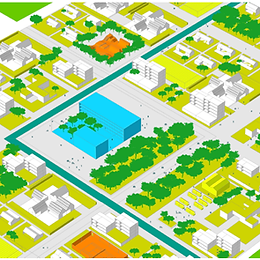
Intelligent Eco Housing Estate, Start in Podkarpackie platform and photovoltaic structures
Ústav geografie PF UPJŠ v Košiciach Vás pozýva na prednášku Dr. Mirosława Łabuza, Dr. Grzegorza Wisza, Dr. Mariusza Bestera (University of Rzeszów, Institute of Physics; Institute of Materials Engineering), na ktorej predstavia projekt The Intelligent Eco Housing Estate 2020 pre zlepšenie kvality života a podporenie udržateľného prechodu na hospodárstvo s nízkymi emisiami, inovatívny prístup k výrobe a vlastnosti tenkovrstvových fotovoltaických panelov a komplexný inkubačný program zameraný predovšetkým na študentov, inovátorov a kreatívnych ľudí s podnikateľským potenciálom (Starting Platform – Start in Podkarpackie). Názov prednášky: 1. Intelligent Eco Housing Estate IEHE2020 – RES & the newest technology
2. Manufacturing and properties of thin-film photovoltaic structures based on titanium oxide and copper oxide
3. Starting Platform – Start in Podkarpackie
4. Current Voltage characteristics of photovoltaic cells based on TiO2 and CuO Dátum: 11. 5. 2023
Čas: 10:00-11:00 Miesto: Ústav geografie, PF UPJŠ v Košiciach, Jesenná 5, seminárna miestnosť SJ2L45 Viac informácií na: https://www.uge.science.upjs.sk/vedecké-semináre